



Shoppers are not searching the same way they were even a year ago. Instead of typing short keywords, they speak full questions into their phones and expect instant, helpful answers. They want direction, reassurance, and the confidence to take the next step.
During our recent webinar, From First Click to Lasting Loyalty, Aubrey Amborn explained this shift clearly.
“It is all open, conversational. People are asking their phones questions.”
She also pointed out that this change is already shaping how customers choose a repair shop.
“AI is here. We cannot avoid it. It is influencing how customers get information about your business before they even make it to your website.”
Below are the top questions shops asked during the session and the practical takeaways you can put to work right away.
Understanding Today’s Buyer
Today’s buyer blends traditional habits with new digital expectations shaped by conversational search and mobile browsing.
How the Journey Begins
Most customers still begin their search online, comparing shops and looking for signs they can trust someone with their vehicle. What has changed is how quickly they expect answers and how they judge whether a shop understands their problem. As Aubrey put it,
“Consumers want a more interactive experience, and the days of having a business card website are gone.”
How the Experience Has Evolved
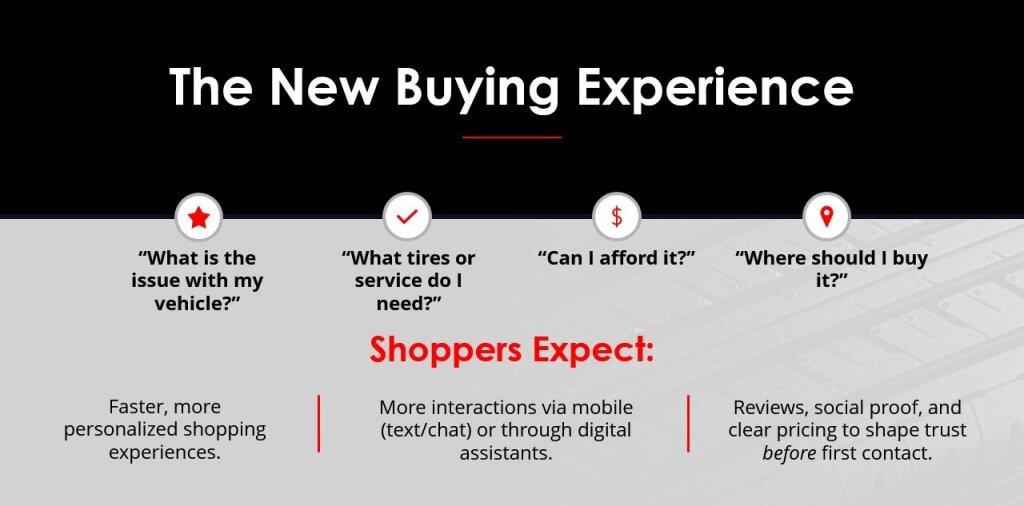
Shoppers now move through a simple set of questions that guide their decisions:
“What is the issue with my vehicle? What tires or service do I need? Can I afford it? Where should I go?”
If your website answers these directly, they stay. If it does not, they leave.
Why It Matters:
Aubrey put it bluntly.
“Your website is the digital front desk. It exposes your business to more consumers than will ever walk into your store.”
A website that answers real questions builds trust faster and helps customers feel confident choosing you.
Q: How do we reduce friction online without overwhelming customers, and still feed AI enough information to find us?
This came up repeatedly because it hits home for most shops. Aubrey broke it into two simple ideas.
1. Customers want clarity and simplicity
Jason hears grinding brakes. He searches for answers. He does not want twenty options. He wants to know what the issue might be, what it may cost, and if he can book today. When your website gives him those answers, he stays.
2. AI needs structure and depth
Lisa types “alternator replacement cost” into her phone. If your site explains symptoms, pricing expectations, and what the service includes, AI connects your shop to her question. Clean, complete content helps both people and search tools.
Learn more about AI-friendly website content here.
Q: We do not stock all the parts we offer. How do we quote accurately online?
Aubrey cleared this up fast. Your quoting tool pulls pricing and availability from your suppliers automatically. It checks real availability, real prices, and then uses your labor rate and markup.
Customers get a straight answer.
You prevent the “How much does it cost?” phone tag.
You still control your pricing structure.
You can give an accurate estimate without keeping every part on a shelf.
Learn more about online quoting here.
Q: Does Net Driven currently offer an AI assistant for shop websites?
Yes. Aubrey explained how AI assistants help shops stay responsive even when the front counter is busy or the shop is closed.
Picture this. A customer’s car will not start and they call at 7 p.m. Normally, no one answers. With an AI assistant, the customer gets help. The assistant gathers details, offers basic guidance, and starts the scheduling process.
Aubrey described it this way:
“It can walk me through what it could be and then help me schedule. This is happening when you are not even open.”
This fits how customers search today. They want to explain their situation in their own words and get an immediate answer. Tools like the AI Tire Expert support that exact type of interaction.
Aubrey summed it up clearly.
“It is like putting your best service writer online twenty four hours a day.”
These tools help your shop stay present even when the front counter is closed and make sure you never miss a customer who is ready to book.
Want to see this in action? Book a demo with our team.
Q: Do reviews affect whether customers and AI trust my shop?
Yes. Reviews now carry more weight than ever because they shape trust for both the shopper and the AI systems recommending shops.
Aubrey put it simply:
“Word of mouth is still number one, but it looks different now. It is what people are saying about you online.”
Customers look for proof they can trust you. AI looks for patterns. Responding to reviews, both good and bad, shows you care about the experience.
“Respond to both. You want to make customers feel appreciated.”
More specific reviews are even better. If a customer writes, “They fixed my alternator” or “Brake job done right,” AI connects your shop with those services.
Learn more about why reviews matter more than ever here.
Q: How do we get analytics from Net Driven?
Every Net Driven client can access analytics through our Account Managers. If you use our online quoting tool, you also get a clear view of which services customers request quotes for, which jobs turn into appointments, and which repairs they decline. This helps you see real demand patterns, not guesses.
Why it matters:
Your data shows which services people actually care about so you can focus on the work that brings in the most value.
Learn more about our Account Managers here.
Quick Wins Your Shop Can Start This Week
These take minutes, not hours, and they help customers find you faster.
1. Post one FAQ-style answer on your website
Pick a question you hear daily. Answer it simply. Even one clear post helps AI understand what you do.
2. Make sure your information is accurate everywhere
Your hours, address, phone number, and services should match across Google, Facebook, Yelp, and your website. If they do not match, AI may recommend someone else.
3. Add one clear action button to your homepage
Give customers a simple place to start, such as “Get a Brake Estimate” or “Schedule Service.”
4. Reach out to a few customers you helped this month
A quick check-in builds trust and often brings people back.
5. Ask for reviews right after the repair
When the customer is happy, send them your review link immediately. That moment is when they are most likely to follow through.
Final Takeaway
The questions raised in the webinar came from shops facing the same challenges you see every day. If you want to go deeper into how these pieces fit together and hear the full conversation behind the answers, the webinar is the best place to start. It offers a clear look at how AI is changing the buyer journey and what shops can do to stay visible and chosen.
You can watch the full session anytime to keep learning and build on what you learned here!